Indian Wedding Watercolor Clipart Bundle: A Designer's Cultural Gem
There's something undeniably magical about the swirl of color, texture, and tradition in an Indian wedding. The rich reds, shimmering golds, and intricate patterns tell stories of heritage, love, and celebration. For designers, capturing that essence authentically can be a challenge—until you find assets that truly understand the aesthetic. That's where a thoughtfully curated collection of illustrations becomes invaluable, transforming your projects from generic to genuinely evocative.
Beyond Stock Photos: The Authenticity of Hand-Painted Art
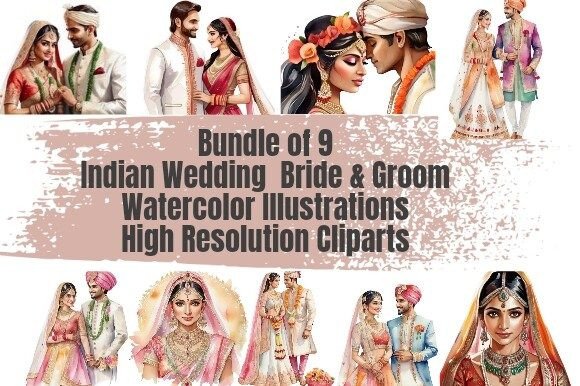
Digital design often leans on photography or flat vector graphics. While useful, they can lack the warmth and tactile quality that makes a piece feel personal. Watercolor illustrations bridge that gap beautifully. The slight imperfections, the bleed of one hue into another, the texture of the paper—these elements convey handcrafted artistry. An Indian Wedding Watercolor Clipart Bundle specifically honors the cultural details that matter: the drape of a saree, the embroidery on a sherwani, the symbolic motifs in jewelry. This isn't just clipart; it's a toolkit for visual storytelling that respects its source material.
Practical Applications for Creative Professionals
So, how do you actually use this kind of asset? The versatility might surprise you. It's far more than just for wedding invitations, though it excels there. Consider these real-world scenarios:
- Brand Identity & Packaging: A boutique Indian fashion label or a specialty tea company could use these illustrations on packaging, business cards, and shopping bags to instantly communicate cultural authenticity and premium quality.
- Digital Marketing & Social Media: Create stunning Instagram posts, Facebook ads, or Pinterest pins that stop the scroll. The visual richness is perfect for promoting cultural events, jewelry lines, or even travel content focused on India.
- Editorial & Blog Design: Enhance articles about wedding planning, cultural traditions, or beauty with relevant, beautiful imagery that elevates the reader's experience and establishes your blog's aesthetic authority.
- Product Design & Merchandise: Imagine these illustrations on tote bags, notebooks, or greeting cards. They offer a sophisticated alternative to generic patterns, appealing to a niche audience that values design integrity.
- Web Design & Digital Products: Use elements as subtle background accents, header illustrations, or icons for a website dedicated to event planning, cultural education, or artisan crafts. They can also become part of a digital planner or scrapbooking kit you sell.
Integrating Art into a Cohesive Design System
Having beautiful assets is one thing; using them effectively is another. The goal is to enhance your message, not overwhelm it. Here’s a practical approach:
Start with a Clear Hierarchy. Use a full illustration as a hero image on an invitation or a landing page. Then, pull individual elements—a floral motif, a jewelry detail—to use as smaller accents in your layout. This creates a cohesive visual language. The PNG files with transparent backgrounds are perfect for layering these elements over text or other design components without awkward white boxes.
Pair with Complementary Typography. This is crucial. The ornate nature of the illustrations calls for typefaces that balance them. A clean, modern sans serif font can provide excellent contrast and readability for body text. For headlines or accent text, a refined serif font or an elegant script font can echo the traditional feel without competing. Avoid overly busy or decorative fonts that would clash with the detailed artwork.
Consider Color Harmony. The watercolor palette is your guide. Pull the dominant colors—the deep marigold, the ruby red, the emerald green—and use them as your project's color scheme. This ensures the illustrations feel integrated, not pasted on. It strengthens your brand identity and creates a professional, polished look.
Key Considerations Before You Download
Before investing in any design asset, a few checks save headaches later:
- Resolution & Format: High-resolution PNG and JPG files are standard for professional use. Confirm the DPI (dots per inch) is suitable for both digital (72 DPI) and print (300 DPI) projects if you plan to use them across mediums.
- Licensing: This is non-negotiable. Always verify the license allows for commercial use. Can you use the final design on products for sale? Are there restrictions on the number of prints or impressions? A clear, permissive license is a hallmark of a premium font or asset bundle.
- Authenticity & Detail: Scrutinize the illustrations. Do they look generic, or do they show genuine understanding and respect for the cultural elements? Authenticity resonates with audiences and elevates your work.
Ultimately, the right design assets are an investment in your project's success. They save time, inspire creativity, and help you communicate with a level of sophistication that generic tools cannot match. For projects that demand cultural depth and artistic flair, a collection like this provides a foundation for truly memorable work.